 +34 934 790 600
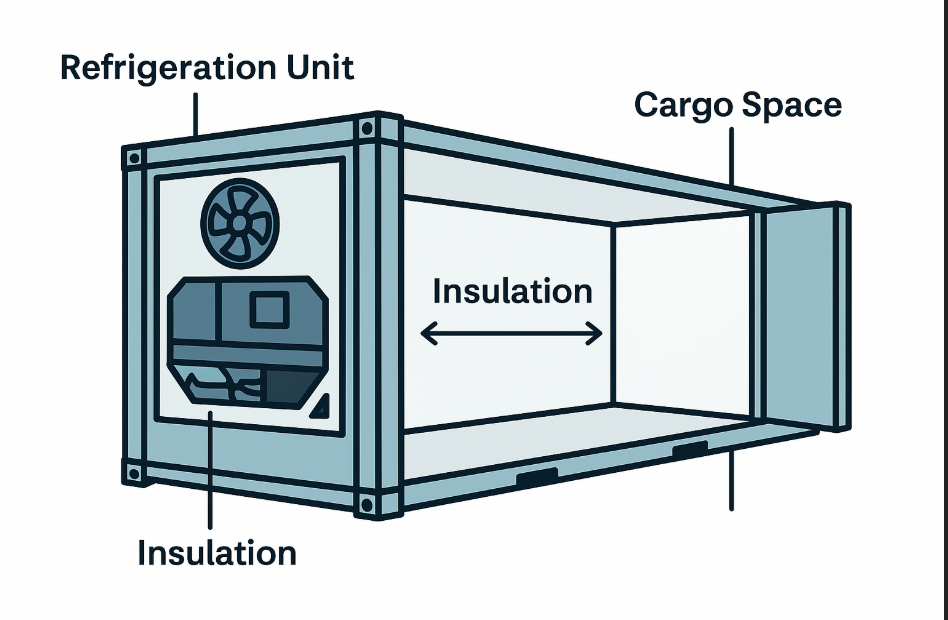
Why is preventive maintenance key?
- Maximizes efficiency: lower energy consumption and more stable temperature.
- Prevents claims and penalties due to temperature deviations.
- Ensures quality and safety of perishables and pharmaceuticals.
- Reduces unexpected costs from breakdowns and lost cargo.
Pre-trip checklist: what to inspect before loading?
Important: Reefer containers do not have an “air filter.” Regular maintenance focuses on coils (evaporator/condensor), fans, tightness, and electronics. The refrigeration circuit may include filter-dryers (liquid line), depending on the model.
- Insulation and panel integrity. Check for dents or punctures that compromise insulation.
- Doors and rubber gaskets. Ensure an airtight seal; lubricate or replace cracked seals.
- Refrigeration system (compressor and fans). Listen for abnormal noises (possible bearing issue).
- Refrigerant and oil levels. Check with a gauge and look for signs of leakage if pressure is low.
- Evaporator and condenser coils. Clean fins with compressed air or a soft brush to maintain airflow.
- Electrical installation. Inspect cables, connectors, and protections; check for overheating signs.
- Temperature sensor calibration. Compare panel reading with a certified thermometer.
- Clean and unobstructed interior. Avoid residues that may contaminate or block air circulation.
Common issues and solutions (pre-trip)
- Fans with metallic noise: clean or replace bearings.
- Refrigerant leaks: detect with a sniffer or foam; repair and recover/recharge per regulations.
- Doors not sealing properly: adjust hinges; replace deformed gaskets.
- Intermittent alarms: check the unit manual and reset; if persistent, contact technical service.
Post-trip checklist: maintenance after unloading
- Complete interior cleaning with food-grade products.
- Clean drains to avoid water accumulation and mold.
- Structure and corrosion: inspect chassis/panels; remove rust and seal cracks.
- Coils (condenser/evaporator): remove dust and debris to maintain thermal efficiency.
- Seals and gaskets: disinfect if perishables were carried to prevent cross-contamination.
- Registered alarms: download and analyze codes; schedule corrective actions.
- Plan corrective maintenance if anomalies were detected.
Common issues and solutions (post-trip)
- Interior humidity: ensure drains are clear and proper air exchange.
- Persistent odors: clean with neutralizer and ventilate thoroughly.
- Rust on fittings: use anti-corrosion lubricant; replace if excessively worn.
Annual maintenance schedule
Seasonal tip: in summer, prioritize condenser cleaning and fan inspection due to high temperatures.
| Period | Key tasks | Suggested responsible |
|---|---|---|
| Quarterly | General inspection, lubrication, coil cleaning | Internal operator |
| Semi-annual | Pressure test, sensor calibration, electrical check | Certified technician |
| Annual | Full service, oil analysis, deep cleaning | External provider |
Sources and resources
- Container Focus 2022 – Refrigerated Cargo Analysis report (The Swedish Club)
- Manufacturer manuals (Carrier, Daikin, Thermo King, Star Cool) for specific procedures.
Quick FAQs
How much does annual maintenance cost? It depends on the provider and scope, but it’s usually marginal compared to the cost of a cargo loss incident.
How often should coils be cleaned? Inspect after each trip and perform a full cleaning during quarterly/semi-annual maintenance.
Can I load “warm” products? No: the reefer is designed to maintain temperature, not to lower it from ambient.
You might also be interested in
- What is a reefer container and how does it work?
- Why use original spare parts in your refrigerated container?
- How to choose the right spare parts for your refrigerated (Reefer) container
- How to identify the correct part code on your Reefer container
- When to replace filters, sensors and valves in your Reefer
- Visual inspection checklist for your Reefer container
- Common Errors in Reefer Container Maintenance
- Energy Efficiency in Transoceanic Routes: How to Optimize Reefer Container Consumption
- Reefer temperature sensors: types, common failures and replacement parts