 +34 934 790 600
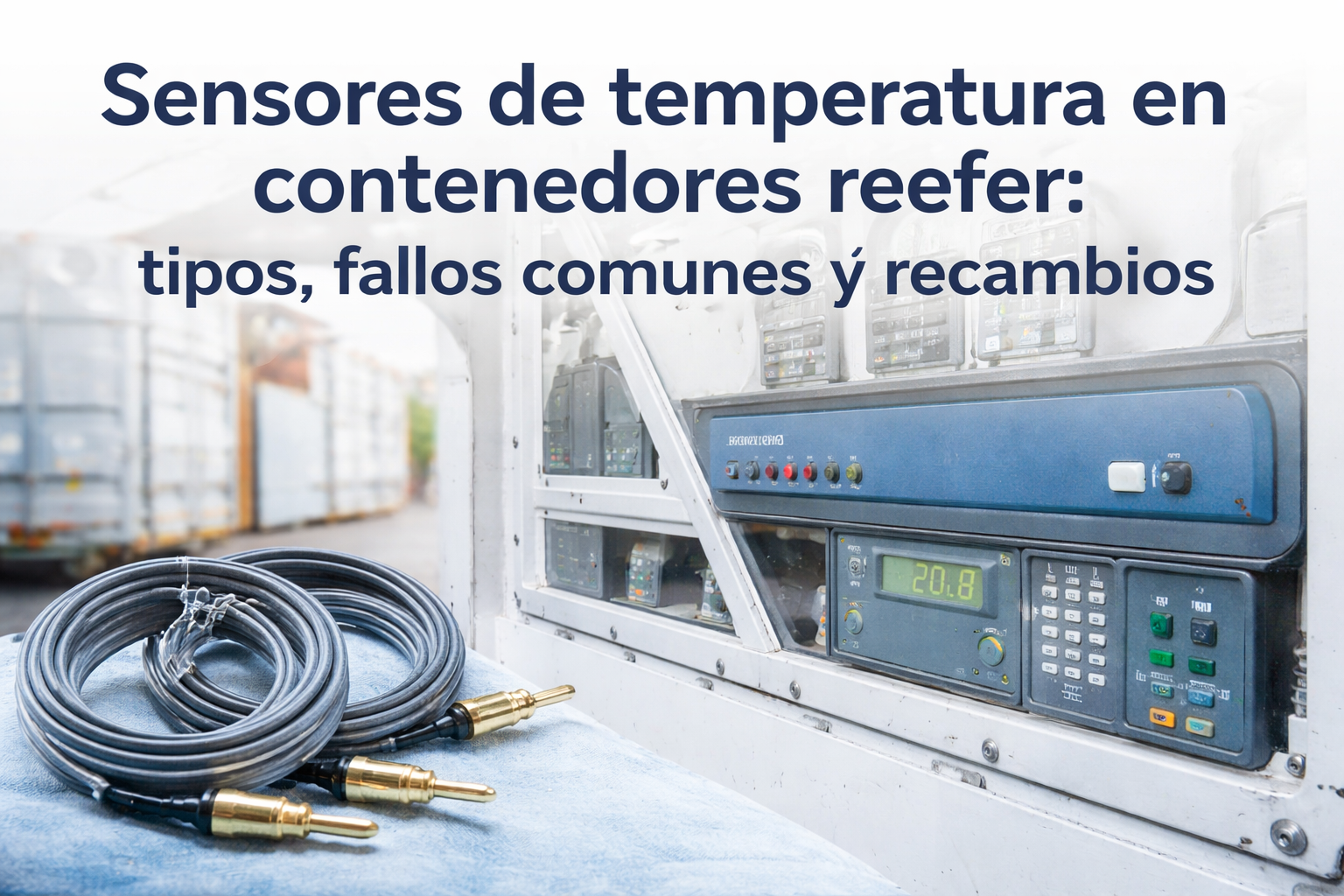
In refrigerated containers (reefers), temperature is everything. A small reading error can trigger alarms, cause temperature deviations, or even lead to cargo loss. In many cases, the root cause is not the entire refrigeration unit, but a much simpler component: the temperature sensor.
In this article, we explain what types of sensors exist in a reefer container, the most common failures, and how to choose the right replacement part to keep your equipment running reliably.
What are reefer temperature sensors used for?
Temperature sensors measure and send the actual air temperature values inside the container to the controller. Based on this information, the reefer unit regulates the compressor, fans, and the refrigeration system.
A faulty sensor can cause:
- Incorrect temperature readings
- Abnormal differences between real and displayed values
- Unnecessary alarm activation
- Higher energy consumption
- Risk to the transported cargo
That’s why, when deviations appear without an obvious cause, checking the sensors is often the first step before working on more complex components.
Types of temperature sensors in reefer containers
Supply sensor
The supply sensor measures the temperature of the cold air leaving the refrigeration system and entering the container.
Key features:
- Controls the supply air temperature
- Essential to maintain the set point
- An incorrect reading directly affects unit performance
Common issues:
- Unstable readings
- Consistent differences compared to the return sensor
- Temperature alarms with no real cause
Return sensor
The return sensor measures the temperature of the air returning from inside the container to the reefer unit.
Its function is to:
- Verify that the cargo temperature is correct
- Compare the thermal behavior with the supply value
Frequent problems:
- Progressive drift over time
- Excessive differences compared to supply
- False high-temperature alarms
Other related sensors
Depending on the unit model, there may be additional sensors such as:
- Ambient air sensors
- Evaporator sensors
- Discharge sensors
Even if they are not all directly related to the cargo, an incorrect reading can affect the overall system operation.
Most common failures in reefer temperature sensors
Typical symptoms that may indicate a sensor problem include:
- Unstable temperature readings
- Consistent differences between supply and return
- Intermittent alarms with no mechanical cause
- Sudden temperature changes in logs
- Temperature deviations even when the unit seems to operate correctly
In many of these cases, replacing the sensor solves the issue quickly and cost-effectively.
When should you replace a temperature sensor?
Although sensors are not immediate wear parts, they do have a limited service life—especially in demanding environments such as maritime transport.
It is recommended to replace the sensor when it:
- Shows inconsistent readings
- Has triggered repeated alarms
- Raises doubts about reliability
- Is included in preventive maintenance
Replacing a sensor in time can help avoid:
- Equipment downtime
- Cargo losses
- More expensive interventions
How to choose the right replacement sensor for your reefer
Before buying a temperature sensor, make sure to verify:
- Reefer unit brand
- Exact model
- Sensor type (supply or return)
- Original part reference
- Manufacturer compatibility
Not all sensors are interchangeable, even if they look similar. Using an incompatible sensor may cause incorrect readings and recurring faults.
Common mistakes when buying temperature sensors
Here are some frequent mistakes to avoid:
- Choosing a sensor based only on appearance
- Not checking the exact part reference
- Confusing supply and return sensors
- Buying without confirming compatibility with the unit
Reviewing these points before purchase saves time, money, and future issues.
Frequently asked questions about reefer temperature sensors
Can a faulty sensor cause false alarms?
Yes. This is one of the most common issues when a sensor starts to fail.
Can I use a compatible sensor instead of an original one?
It depends on the model and manufacturer. Compatibility should always be verified.
Is it difficult to replace a temperature sensor?
In most cases, replacement is straightforward for a qualified technician.
Should sensors be replaced preventively?
For heavily used units, preventive maintenance reduces failures and operational risk.
Keep your reefer under control with the right sensors
Temperature sensors are small components, but critical for the proper operation of a reefer container. Detecting a problem early and installing the correct replacement part is one of the most effective ways to protect your cargo and avoid bigger issues.
You can check compatible reefer temperature sensors for your unit in our online store.
You might also be interested in
- What is a reefer container and how does it work?
- Why use original spare parts in your refrigerated container?
- How to choose the right spare parts for your refrigerated (Reefer) container
- How to identify the correct part code on your Reefer container
- When to replace filters, sensors and valves in your Reefer
- Visual inspection checklist for your Reefer container
- Common Errors in Reefer Container Maintenance
- Energy Efficiency in Transoceanic Routes: How to Optimize Reefer Container Consumption
- Reefer temperature sensors: types, common failures and replacement parts