 +34 934 790 600
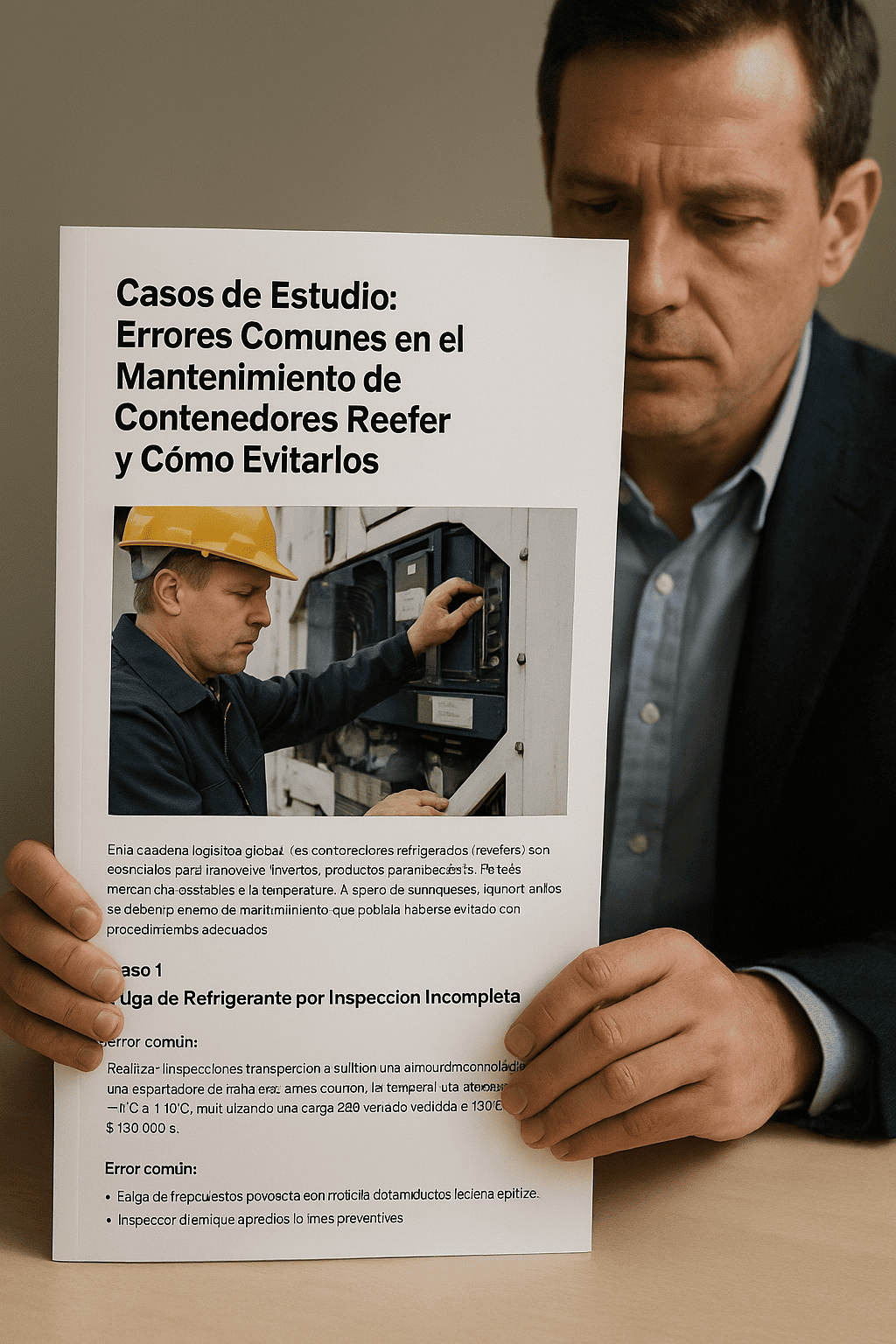
Case Studies: Common Errors in Reefer Container Maintenance and How to Avoid Them
In the global logistics chain, refrigerated containers (reefers) are essential for transporting food, pharmaceuticals, flowers, and temperature-sensitive goods. Despite their robustness, many failures are due to maintenance errors that could have been avoided with proper procedures. These breakdowns often lead to delays, cargo loss, and high operational costs.
At DEPOTZF S.A., with over 30 years of experience in reefer spare parts and maintenance, we have observed recurring patterns among companies, shipping lines, and operators. Below, we present anonymized real cases illustrating the most common errors, along with practical recommendations to prevent them from happening.
Case 1: Refrigerant Leak due to Incomplete Inspection
A Latin American fruit exporter suffered a breakdown during a transatlantic voyage in a Carrier reefer. The internal temperature rose from -1°C to +10°C, rendering a cargo valued at $150,000 unusable. The cause: a refrigerant leak in the compressor caused by a worn-out gasket that was not detected during the PTI (Pre-Trip Inspection).
Common Error:
Performing superficial inspections that verify basic parameters but omit a meticulous visual check of the refrigeration circuit.
Lessons Learned:
Vibrations during sailing can aggravate micro-fissures that go unnoticed in port.
Preventive Tips:
- Conduct full PTIs at least 48 hours before loading.
- Include pressure testing and the use of leak detectors.
- Replace gaskets with original spare parts to prolong the system’s useful life.
The incident generated an additional $20,000 in repairs and penalties.
Case 2: Electrical Failure due to Use of Non-Original Spare Parts
A European operator decided to install a generic relay in a Thermo King reefer to cut costs. During the transport of vaccines at a low temperature, the relay failed because it could not tolerate voltage variations. The unit lost power intermittently, and the cargo, valued at $300,000, was rendered unusable.
Common Error:
Using non-original (non-OEM) spare parts without checking their compatibility with equipment designed for demanding marine conditions.
Lessons Learned:
Non-original electrical components are often less resistant to humidity, saltpeter (salt spray), and unstable voltages typical of ports.
Preventive Tips:
- Prioritize OEM spare parts with a manufacturer’s warranty.
- Establish a scheduled replacement plan for relays, contactors, and PCBs.
- Incorporate remote monitoring to detect electrical anomalies before they cause critical failures.
The total cost exceeded $400,000, including claims for breach of contract.
Case 3: Corrosion due to Incorrect Cleaning
An Asian fleet used saline water for the exterior cleaning of their Daikin reefers. Over time, this caused accelerated corrosion on the evaporator and chassis, leading to a rupture that released refrigerant and damaged $80,000 worth of merchandise.
Common Error:
Neglecting the correct cleaning of the reefer and using corrosive products on metallic materials exposed to the marine environment.
Lessons Learned:
The accumulation of salt and dirt drastically shortens the unit’s useful life and can generate internal breakdowns that are difficult to detect.
Preventive Tips:
- Perform periodic cleaning with suitable anti-corrosion products.
- Inspect drains and areas prone to moisture accumulation.
- Apply protective coatings to exposed structures.
The repair amounted to $15,000, a cost that could have been avoided with simple, regular routines.
Case 4: Overheating due to Overload and Poor Distribution
An African distributor loaded a reefer above the recommended limit and without respecting the ventilation channels. During a journey through desert areas, the system could not maintain airflow, and the compressor eventually overheated. The dairy products transported, valued at $100,000, spoiled.
Common Error:
Ignoring loading diagrams and blocking ventilation grilles.
Lessons Learned:
Obstructing airflow generates hot spots that overload the compressor and affect the reefer’s thermal stability.
Preventive Tips:
- Always respect the space between pallets and the air circulation guides.
- Use data loggers to record variations during the voyage.
- Train personnel in cargo simulation models to avoid invisible risks.
Conclusion: Prevention is the Best Investment
These cases demonstrate that the most costly breakdowns are often the most avoidable. Implementing rigorous inspections, using original spare parts, and applying good loading and cleaning practices reduces failures, extends the useful life of the units, and protects the cargo.
At DEPOTZF, we support our clients with technical advice, supply of original spare parts, and predictive maintenance programs to maximize the efficiency of their equipment.
If you want to prevent your company from being the next case study, contact us and we will help you strengthen your Reefer fleet.
You might also be interested in
- What is a reefer container and how does it work?
- Why use original spare parts in your refrigerated container?
- How to choose the right spare parts for your refrigerated (Reefer) container
- How to identify the correct part code on your Reefer container
- When to replace filters, sensors and valves in your Reefer
- Visual inspection checklist for your Reefer container
- Common Errors in Reefer Container Maintenance
- Energy Efficiency in Transoceanic Routes: How to Optimize Reefer Container Consumption
- Reefer temperature sensors: types, common failures and replacement parts